
5x+ ROAS made repeatable. €10,000+/mo powered by clean tracking.
We implement proper tracking (GTM / CAPI / GA4), fix signal loss, and let Meta & Google optimise on revenue — so scaling becomes predictable.
€1.2M+
Monthly client revenue
4.25
Average ROAS
13.45
Max ROAS
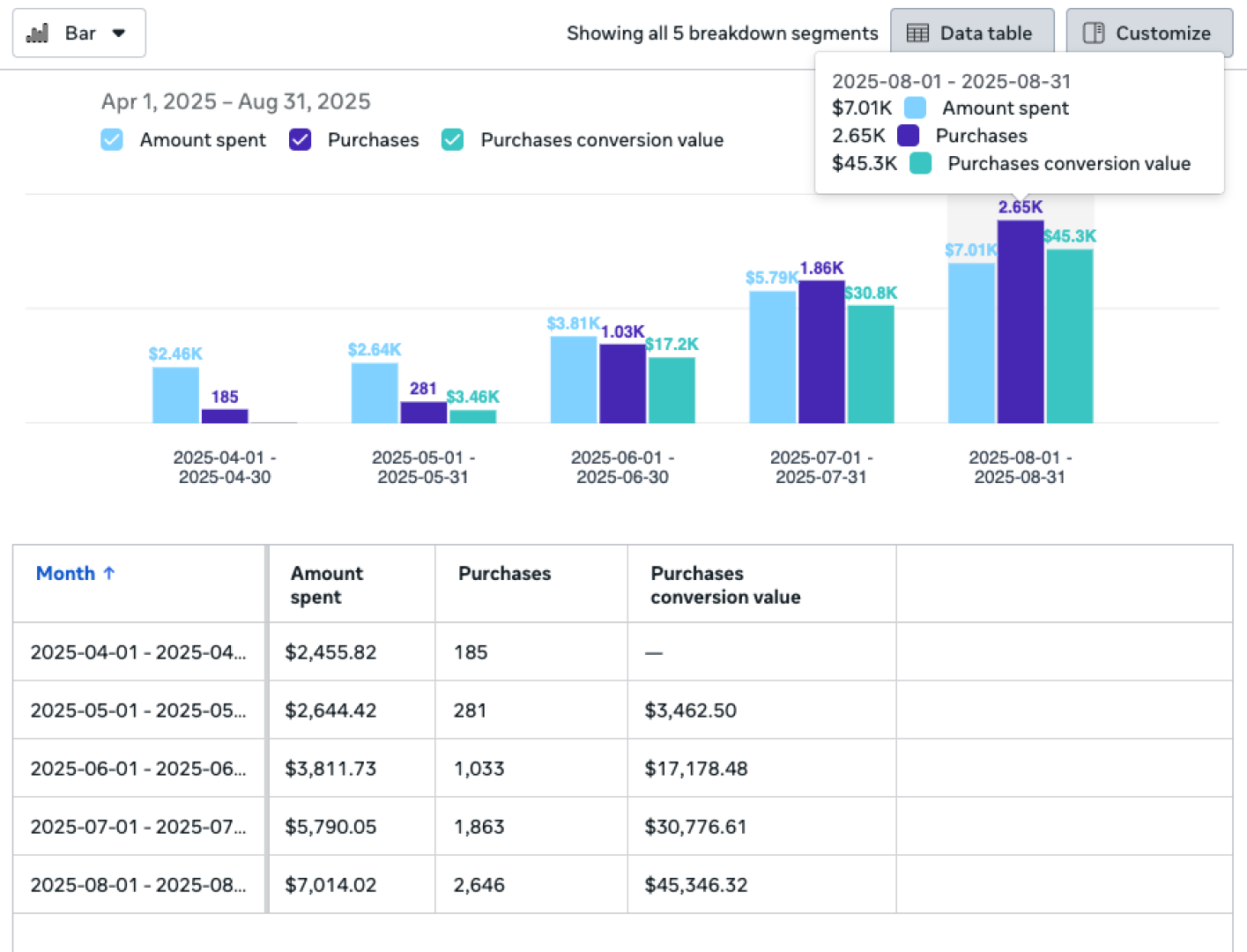
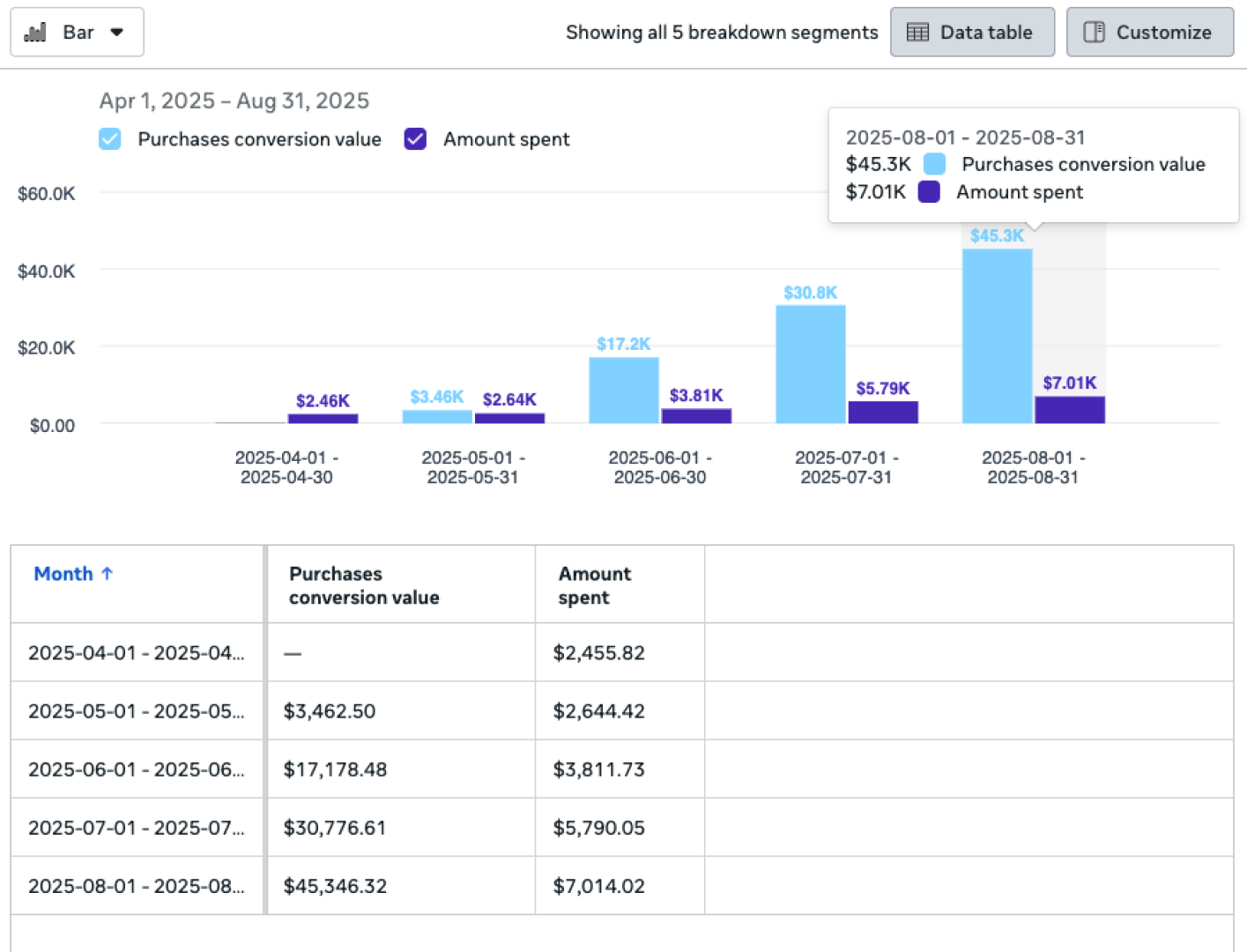
Struggling to scale? The issue is data quality, not your product.
When Google & Meta can’t see clean purchase signals, they optimise on incomplete events. Spend shifts to clicks instead of conversions — ROAS drops and growth stalls.
Up to 50% of purchase events untracked — platforms under-attribute revenue.
Up to 30% of users unmapped (low Event Match Quality) → models train on partial data.
Event misfires / mislabeled events (ATC / IC / Purchase) → optimisation degrades.
20–25% recurring budget leakage from noisy signals and click-based optimisation.
Business impact
- • Cabinet shows a low CPA — because Meta trains on clicks and "fake" events, not real sales. Your actual cost per customer in the CRM is 20–40% higher.
- • ROAS down 2–3× within weeks.
- • Faster fatigue: campaigns lose efficiency quickly.
- • Advantage+ / PMax instability caused by dirty data.
- • Scale capped: more spend, same outcome.
Bad tracking breaks your catalogue — the algorithm shows the wrong products
When Meta can't see what people actually buy, it optimises on the wrong signals. Irrelevant products drain the budget while your best sellers land in the "white zone" and never get shown.
What Meta sees in your catalogue
Running Shoes
not in product feed
Slim Fit Jeans
item_id not found
Gift Set
event not triggered
Wool Coat
excluded from catalogue
Leather Bag
value = 0
Plush Bear
item_id ≠ feed
Princess Set
duplicate Purchase events
Air Max 90
full data ✓
After setup
ROAS 7.2 | 800+ purchases/mo
×4From a real project — eCommerce store running Meta Ads at $5,000/mo.
From data chaos to steady scale — step by step
We don't promise "miracles in 3 days." Our job is to fix the foundation, set up proper data collection, and optimise the accounts. Campaigns stay live, but in week one we make only minimal changes until signals are clean. Within the first 30 days you'll see measurable uplift.
- 11Day 1–2🔍
Audit
- Identify weak spots in tracking and ad accounts
- Clear report showing how much budget is lost to dirty data
- 22Day 3–5🧩
GTM / Data Layer
- Build a transparent event structure aligned to business metrics
- Document everything so you aren't dependent on developers later
- 33Day 6–7🖥️
CAPI / GA4
- Server-side tracking (sGTM, CAPI, GA4), EU-hosted, GDPR-friendly
- Restore accurate purchase & revenue signals (90%+ signal quality)
- 44Day 8–10✅
Validation
- Verify event firing in Ads Manager and GA4
- Test every key flow: cart, checkout, payment
- 55Day 10–17🚀
Campaign relaunch
- Campaigns run immediately; first week = minimal changes only
- After signal clean-up expect lower CPA and higher ROAS
- 66Day 17–47📊
30-day monitoring
- Weekly checks and signal adjustments
- Stable scaling without budget leaks
Full journey: ~47 days
€25k/mo on Meta: value restored → scaling unlocked
Before: duplicated events, no value, unstable optimisation. After our GTM Data Layer + CAPI setup, signals turned clean and campaigns became auditable — enabling confident, transparent scaling.
- Meta AdsAd budget: €25,000/moROAS: 2.85
Stage 1 — Initial pain
The brand spent €25k/month on Meta, but the platform couldn’t see purchase value: events were duplicated, the value parameter wasn’t passed, and optimisation was running blind.
What it meant for the business: no reliable ROI, no way to separate profitable SKUs from loss-makers, scaling stalled; campaigns felt like a lottery.
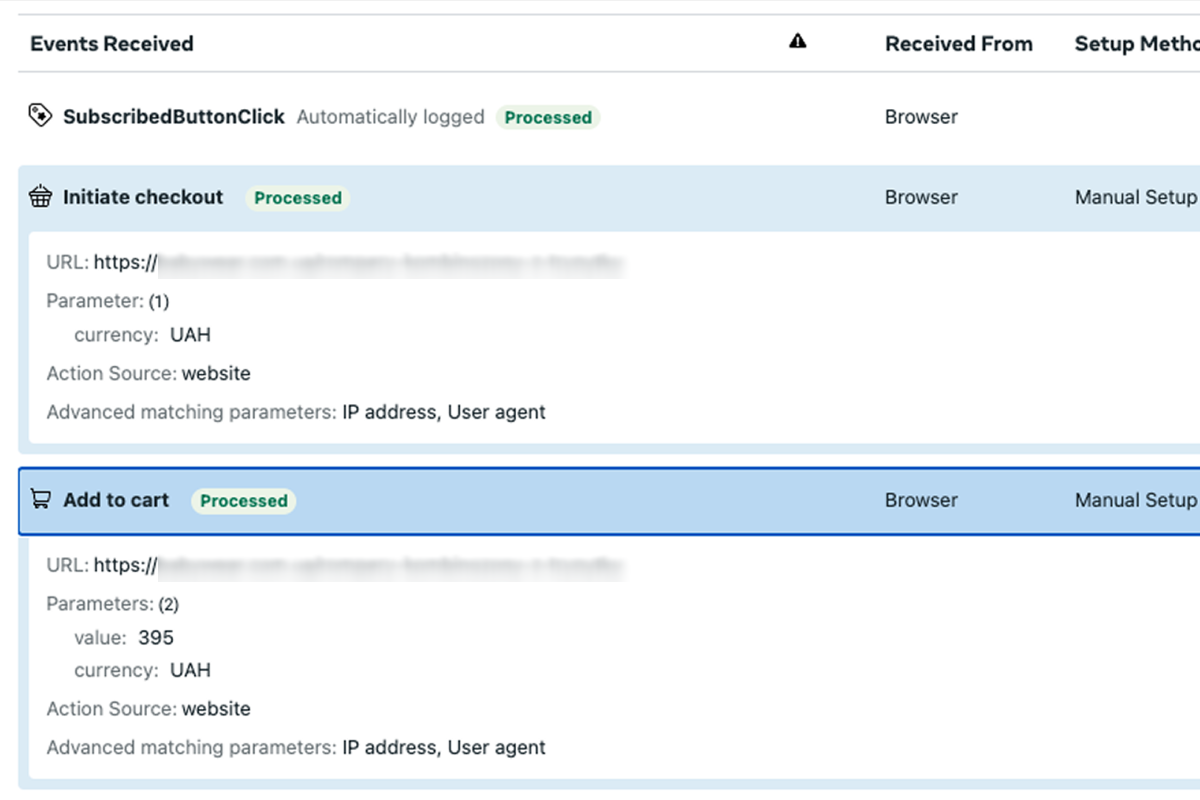
Before optimisation: Meta Ads received duplicate events without value. The algorithm had no real data for optimisation and worked “blind.” - GTMData Layer
Stage 2 — Fixed tracking (GTM + Data Layer)
We added the full eCommerce event set (PageView, ViewContent, AddToCart, BeginCheckout, AddPaymentInfo, Purchase), standardised
id / name / price / category, enabled consent-aware first-party signals (email/phone hashed via CAPI), and removed duplicates.What it meant for the business: Meta could finally see what was bought and for how much; analytics became transparent and profitable SKUs were obvious.
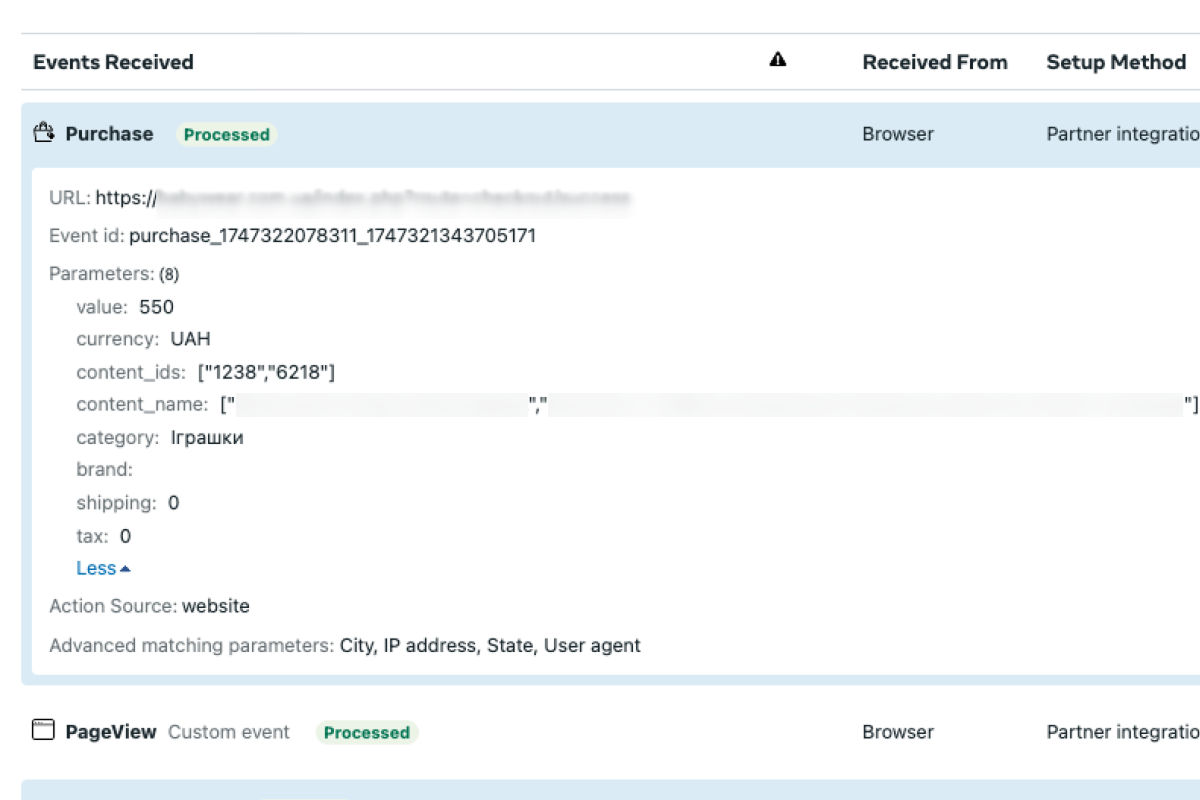
After GTM + DataLayer the Purchase events became complete: value, currency, content_id, category, name, user-data. Meta finally received a transparent view of transactions and could optimise on real revenue. 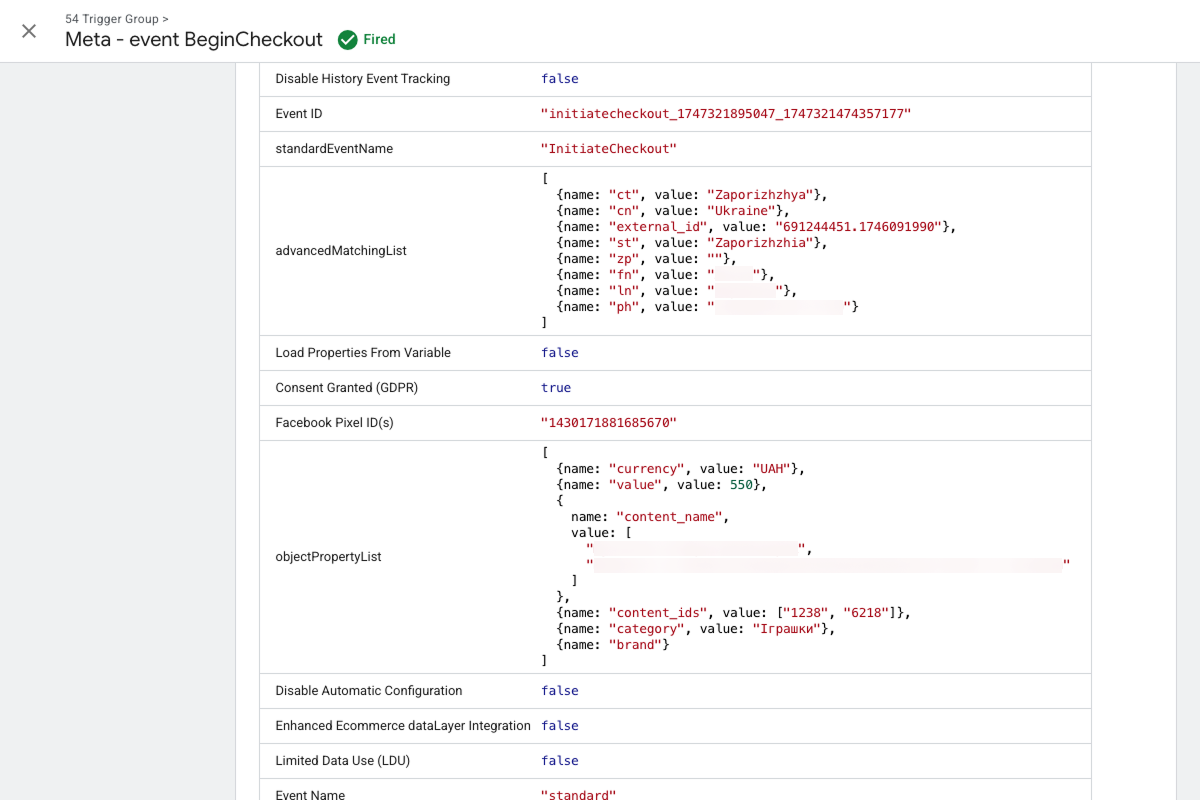
Each event now flows through a unified DataLayer with IDs, product attributes, price, currency, and consent-aware user signals. This removed “noisy” data and gave full control over tracking quality. - Match Rate >99%dPA-ready
Stage 3 — Catalog ready for dPA
After the tracking overhaul, the Catalog Match Rate jumped from 0% to 99%+. This unlocked Advantage+ Shopping and true dynamic product ads.
What it meant for the business: ads now “follow” users with the exact products they viewed or added to cart; sales became more intent-driven, CPA dropped, and ROAS started to grow.
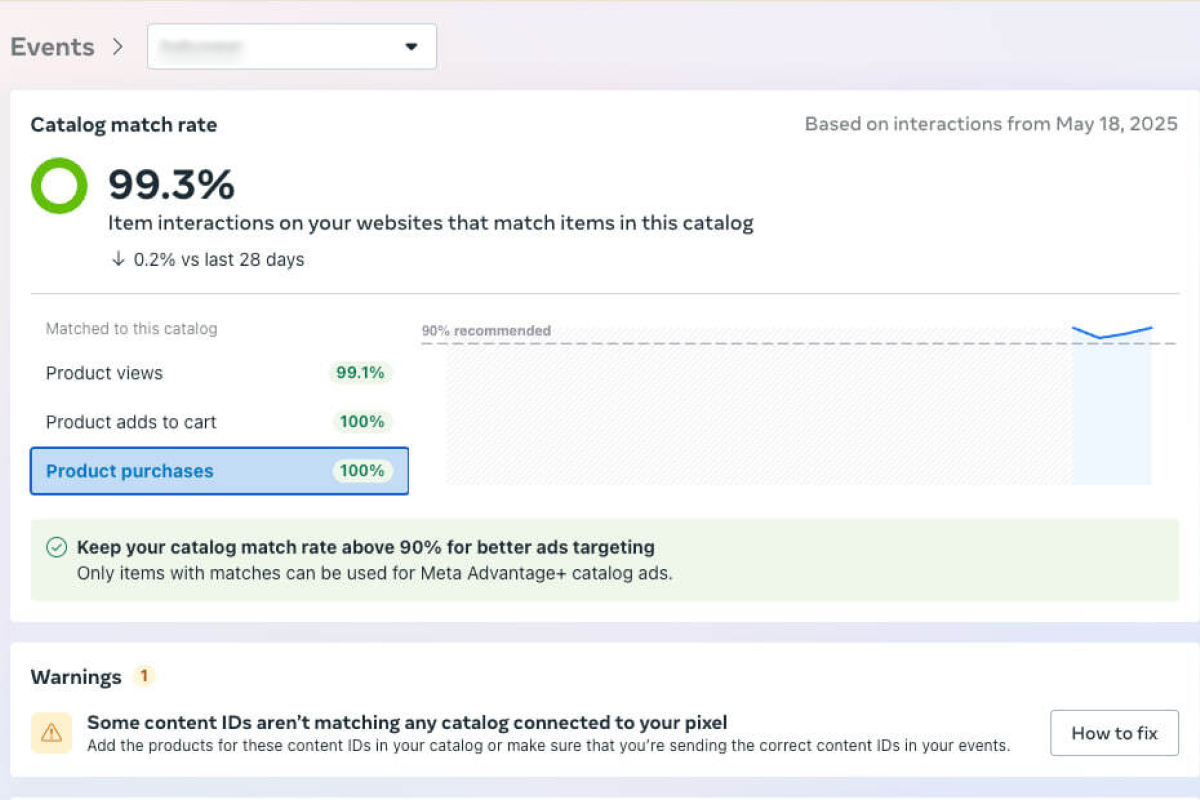
With tracking fixed, Catalog Match Rate climbed to 99%+. Site events now match catalog IDs, unlocking Advantage+ Shopping and dynamic remarketing. - Conversions APIEMQ 9.2/10
Stage 4 — Server-side: stable signals
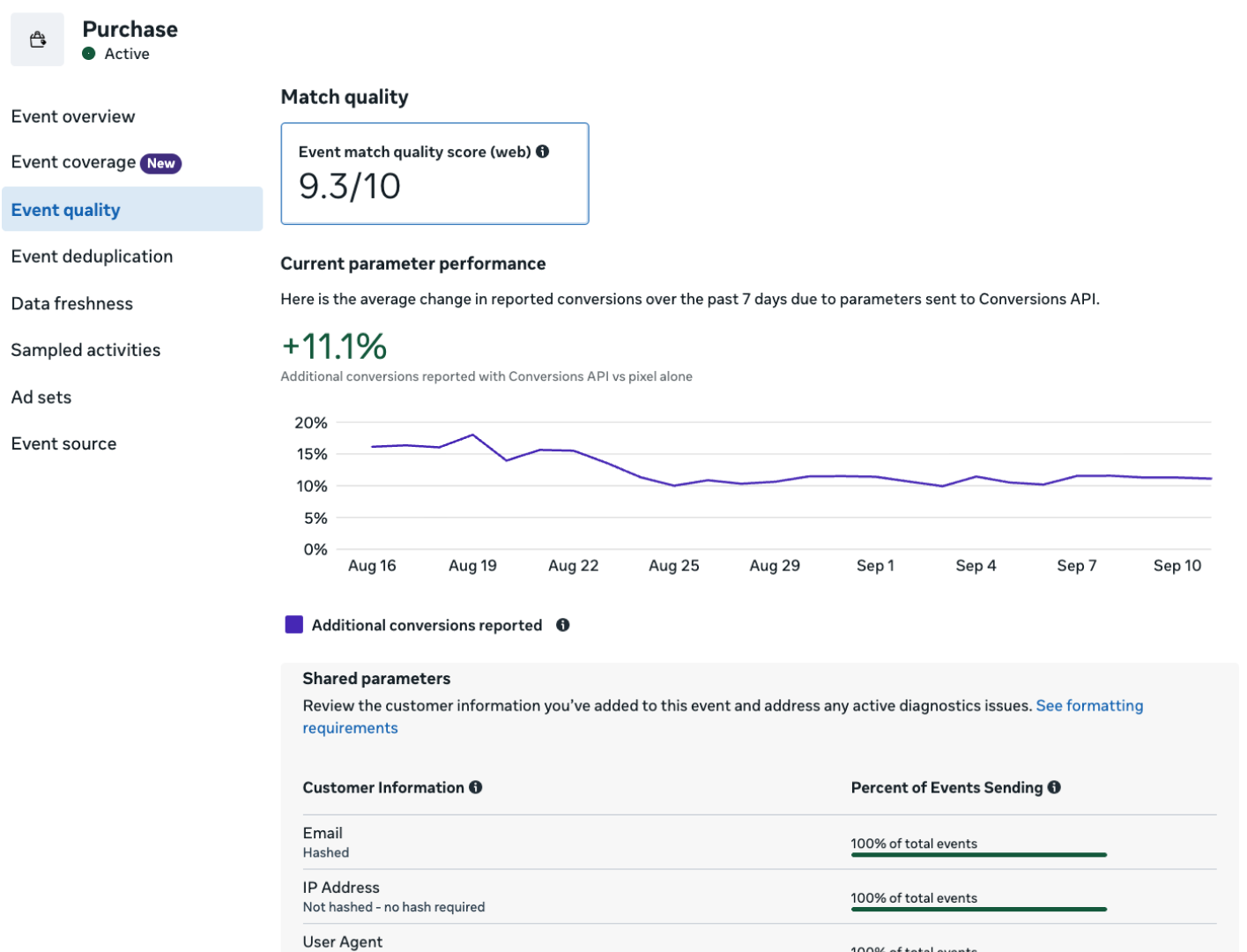
Two months in, we implemented the Conversions API. Event Match Quality for Purchase rose to 9.2/10, and Meta started logging +14% more conversions.
What it meant for the business: purchases previously lost to iOS privacy or ad blockers are now captured; Meta’s algorithms optimise more accurately than competitors.
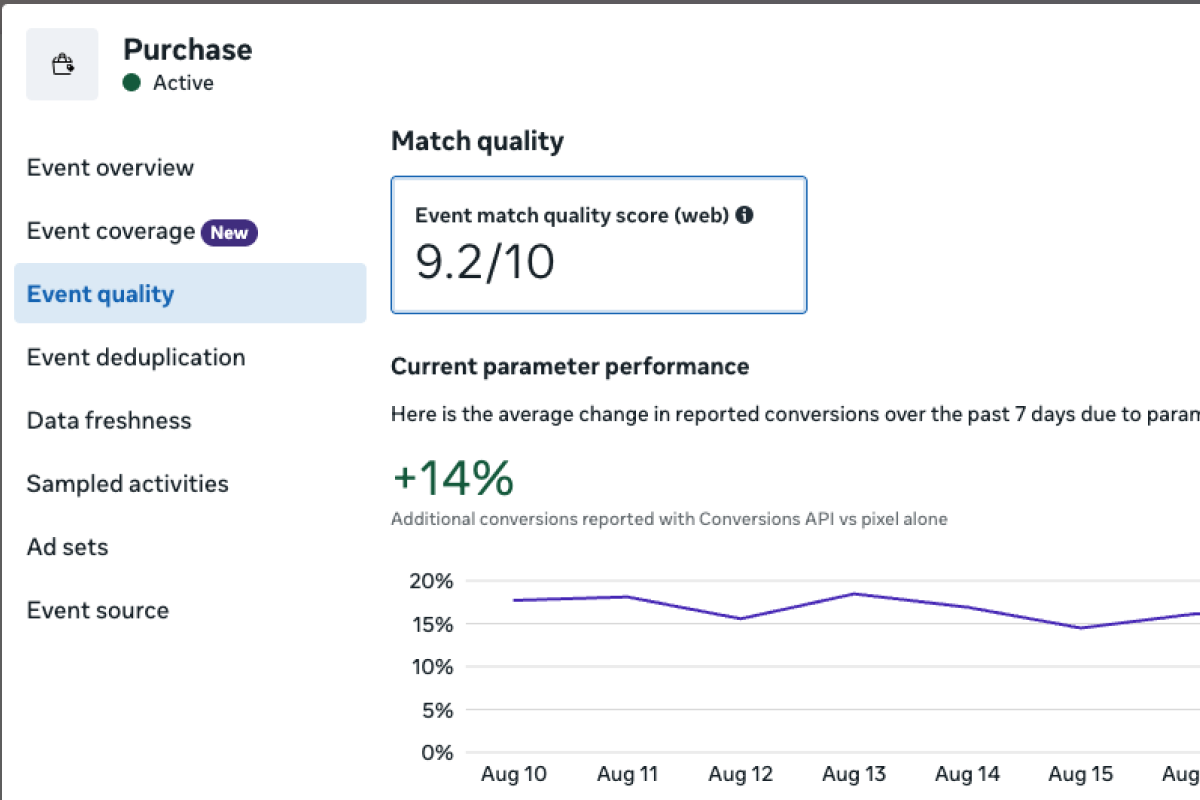
After enabling Conversions API, Event Match Quality reached 9.2/10. Meta started capturing 14% more purchases that were previously lost. - ROAS 7+ steadyPeak 10+
Stage 5 — Result
Within three months ROAS climbed from 3 to a steady 7+ (with 10+ peaks), purchases quadrupled (≈200 → 800+), CPA fell, and the €25k budget started working 2–3× harder.
What it meant for the business: confident scaling without fear of wasted spend — the brand now outpaces competitors.
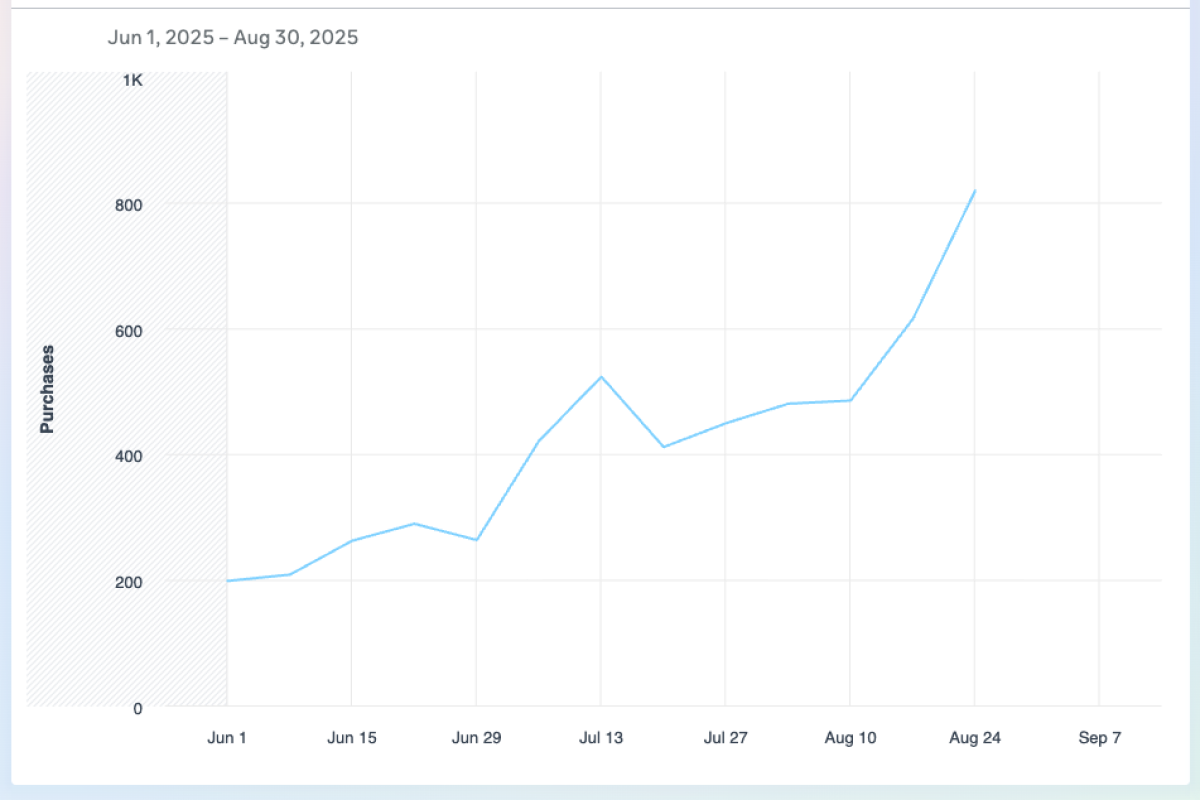
Purchases grew 4× (≈200 → 800+). CPA dropped, ROAS holds at 7+, and the €25k budget now delivers 2–3× more revenue.
Let's talk about your project
Avg response ≈ 2hFill out the form — we’ll review your accounts, show where data is lost, and propose the next steps for profitable growth.
What our clients say
Real results after implementing tracking and signal optimisation.
- verified

Oleksandr K. CEO, fashion eCom“We brought transparency back to the numbers. In 6 weeks ROAS grew from 2.8 to 6.4. For the first time, I feel we can scale without chaos.”

- verified

Maryna P. CMO, kids’ products“We finally see the real value of each purchase. CPA dropped by 32%, and the team explained the technical details in plain language. It really boosted our confidence.”

- verified

Volodymyr L. Co-Founder, home & living“The pixel started “seeing” every key event — from clicks to revenue. ROAS grew from 2 to 4 in the first month. For the first time, ads feel like an investment, not a lottery.”

FAQ — answers to key questions
Here’s how we work and what to expect. Still unsure? Reach out on Telegram and we’ll clarify everything.
What’s included in the monthly partnership?
End-to-end growth: strategy, Meta & Google Ads setup/management, creative testing, analytics, and full tracking implementation (GTM/Data Layer, CAPI, GA4). All in-house.
Is tracking included or billed separately?
Included. We implement server-side tracking (sGTM/CAPI/GA4) as part of the retainer — no technical upsells.
How soon will we see impact?
First improvements appear within 7–14 days after signal clean-up. The full effect usually lands within the first month.
Are you GDPR-compliant?
Yes. EU-hosted sGTM, Consent Mode v2, hashed identifiers, DPA on request. We only collect what’s consented and necessary.
Who do you work with?
We support NL/EU eCommerce brands of any type — DTC and B2B.
How does onboarding work?
Response in ≈2h → 15-min intro → quick audit → tailored plan → launch within 3 days (campaigns stay live; minimal changes during week one).
Do you offer guarantees?
We don’t promise “X in Y days.” We engineer clean data and optimisation you can verify — then scale against agreed KPIs.